
How Do Elk Sleep?
When you picture an elk, you probably imagine it alert and on the move ears twitching, eyes watching, muscles ready to spring into action. But even animals as large and cautious as elk need to sleep. So how do they manage it, especially in the wild, where danger could be just around the corner?
Do Elk Sleep Standing Up?
This is one of the most frequently asked questions. The short answer is no, elk do not sleep standing up. Unlike horses, which can lock their legs and doze while standing, elk usually lie down when they need real rest.
That said, they may rest while standing briefly, especially when they’re being extra cautious or scanning for danger. But for deeper sleep, elk prefer to bed down. Their legs are not built for balancing in a sleep state like horses.

When Do Elk Sleep?
Elk are what’s called crepuscular; they're most active at dawn and dusk. This means they’re likely to sleep during midday and sometimes at night, depending on the season and their level of safety.
Elk don’t sleep for long stretches like humans. Instead, they rest in short bursts throughout the day and night. You might find an elk bedded down for 30 minutes to an hour, then up and alert again soon after.
During stressful times like hunting season or the fall rut season, elk tend to sleep even less. They’re always on the move, either avoiding predators or chasing mates.
How Much Do Elk Sleep?
Elk sleep far less than you’d expect for an animal of their size. Most researchers estimate that elk sleep for about 2–4 hours total per day, broken into shorter chunks.
They aren’t heavy sleepers. Even while lying down, elk keep their senses alert. A quick snap of a twig or scent on the wind is often enough to wake them up immediately.
This type of light, broken sleep, helps elk survive in the wild, where being too relaxed could mean becoming a predator’s next meal.
Where Do Elk Sleep?
Elk don’t have a cozy bed to crawl into, but they’re smart about where they rest. They usually sleep in places that offer a mix of cover and visibility.
Common sleeping spots include:
Grassy meadows near tree cover
Dense brush or timberline areas
Hillsides with a view of the valley
Snow-covered ridges under pine or fir trees
They prefer elevated ground where they can see danger coming and easy escape routes if something gets too close.
Elk also tend to bed down in herds, especially cows and calves. This group behavior adds another layer of protection; some elk rest while others stay alert, keeping watch for predators like wolves or mountain lions.
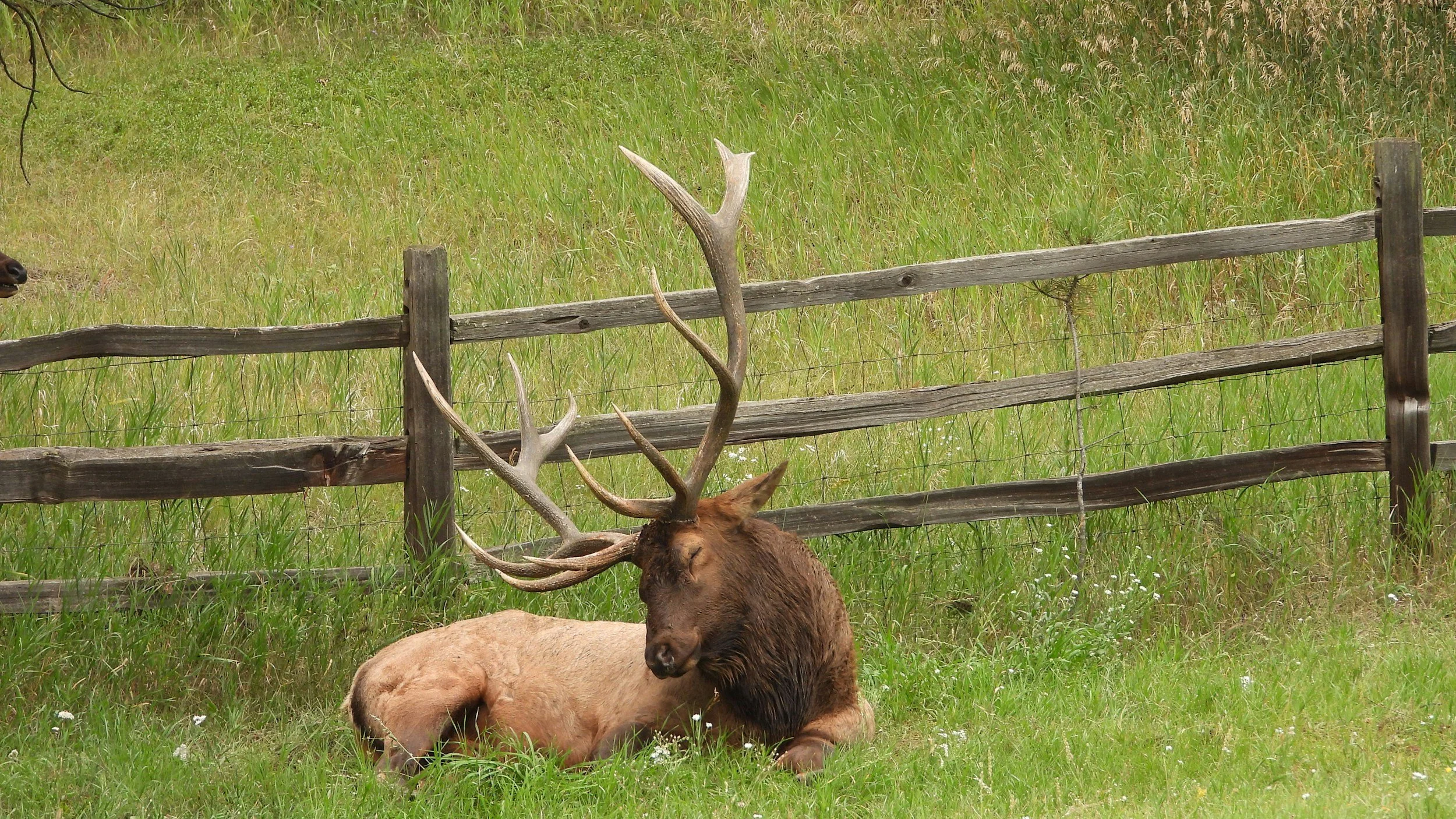
How Elk Stay Safe While Sleeping
Survival is always top of mind for elk, even while they sleep. Here’s how they reduce risk:
Rotating rest: Some members of a herd stay alert while others lie down. They switch roles throughout the day.
Positioning: Elk often face into the wind so they can catch scents from predators.
Quick wake-ups: Elk sleep lightly and can be on their feet in seconds if they sense danger.
This constant vigilance is why it’s rare to sneak up on an elk, even when you think they’re asleep.
Do Calves Sleep Differently Than Adult Elk?
Yes. Elk calves, especially newborns, sleep more often than adults. For the first few weeks of life, a calf will spend much of its time lying quietly in tall grass or brush while the mother grazes nearby.
To avoid drawing attention, the mother elk may bed the calf down alone and return later. These young elk rely on stillness and camouflage, not strength or speed, to avoid predators.
As calves grow older, they begin to match the sleep patterns of adult elk: light, short naps between bursts of activity.
Conclusion: Elk Rest Smarter, Not Longer
So how do elk sleep? In short: carefully, lightly, and with purpose.
They don’t sprawl out for hours at a time. Instead, elk rest in short spurts, often in safe, elevated areas, while taking turns keeping watch. They lie down to sleep, not standing up, and are always ready to react to threats.
Understanding these habits gives hunters, wildlife watchers, and nature lovers a deeper appreciation for just how adaptable and cautious elk are.
